The Mechanics of Liquidity Depletion in TWAP Oracles
This is not a theoretical concern. The attack pattern has been replicated across dozens of DeFi exploits since late 2020, and the root cause remains architectural: TWAP oracles inherit their security assumptions from the AMM pool they read, and those assumptions collapse the moment liquidity can be transiently — or permanently — drained below the cost-benefit equilibrium of rational exploitation. Understanding how this collapse occurs at the protocol layer, and which defensive patterns actually survive adversarial pressure, is the minimum prerequisite for any team deploying price-sensitive smart contracts in production.
Flash Loans as a Catalyst for Price Skewing
The flash loan is the instrument that transforms a low-liquidity pool from a mispriced inconvenience into a systemic vulnerability. Traditional market manipulation requires sustained capital commitment — the manipulator must hold a position, absorb risk, and often wait for settlement. Flash loans eliminate every one of those constraints by compressing the entire borrow-manipulate-repay cycle into a single atomic transaction.
Consider the state transition sequence in a Uniswap V2-style constant-product pool. The TWAP accumulator records the cumulative price at each block. An attacker borrows a large sum via a flash loan from a lending protocol, executes a massive swap in the target pool — pushing the spot price to a manipulated value — then interacts with a downstream contract that reads the TWAP. If the TWAP window is short enough (commonly 30 minutes to several hours), a single block's skewed cumulative value can shift the average meaningfully. The attacker completes the exploit (e.g., borrowing against inflated collateral, liquidating positions, or minting overvalued synthetic assets), unwinds the swap, repays the flash loan, and pockets the delta — all before the next block is mined.
The critical variable is the ratio of flash-loanable capital to pool liquidity depth. Uniswap V3's concentrated liquidity model complicates this calculus somewhat — liquidity is not uniformly distributed across the price curve, and an attacker must deplete the active tick range rather than the entire pool. But concentration cuts both ways: while it increases capital efficiency for legitimate traders, it also means that a well-crafted swap can blow through thin liquidity bands with less capital than a V2 exploit would demand. The net effect is that V3 pools with narrow, actively rebalanced liquidity positions can be more vulnerable to transient TWAP manipulation than their V2 equivalents, not less.
What makes this vector particularly insidious is the economic feedback loop. Protocols that rely on TWAP oracles for collateral valuation create a recursive incentive: the cheaper it is to manipulate the TWAP, the more profitable the downstream exploit, which attracts more sophisticated actors, which drives further liquidity fragmentation as LPs exit volatile pools. The attack surface is self-amplifying.
A TWAP oracle that reads from a single AMM pool is not a price feed — it is a function of that pool's liquidity depth at the moment of query. Treat it accordingly.
Architecting Multi-Source Oracle Aggregation for Resilience
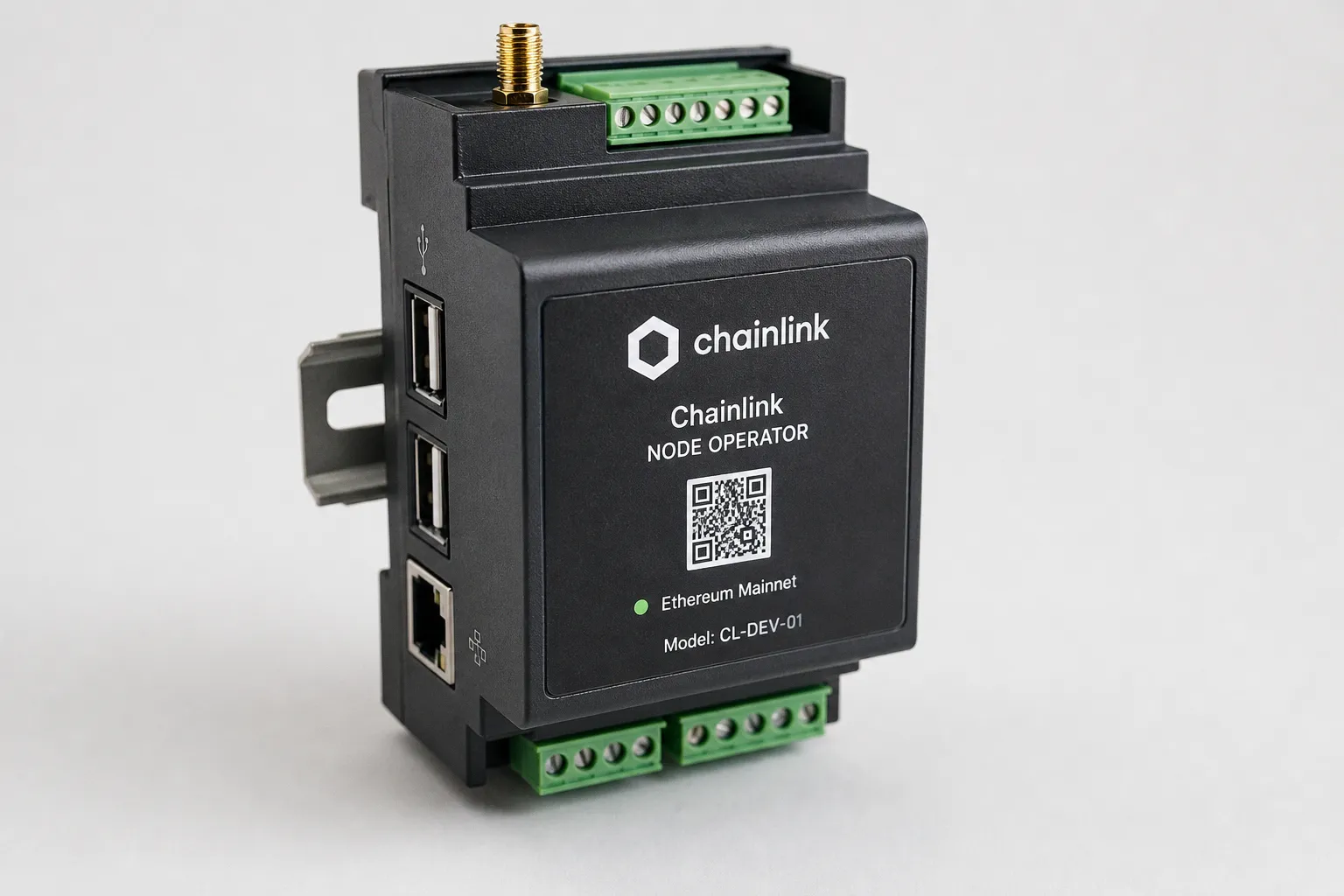
The most robust mitigation strategy — and the one least dependent on assumptions about pool-level liquidity — is to stop relying on a single on-chain price source entirely. Decentralized oracle networks such as Chainlink operate by aggregating price data from multiple off-chain exchanges and market makers, then posting a medianized value on-chain through a committee of node operators. The manipulation cost scales with the number and diversity of sources: an attacker must simultaneously skew prices across multiple centralized and decentralized venues, which requires capital and market impact far beyond what a single flash loan can achieve.
For protocol architects, the integration pattern is straightforward but carries its own trade-offs. A Chainlink price feed provides liveness guarantees and Byzantine fault tolerance at the oracle layer, but introduces latency (updates occur at intervals, typically every few minutes or on significant deviation) and dependency on the oracle network's own uptime and governance. The composite approach — using a Chainlink feed as a primary reference and an on-chain TWAP as a fallback or sanity check — is increasingly common in production deployments. The key design decision is which source serves as the canonical truth and which serves as the circuit breaker trigger.
The following table summarizes the trade-offs across three common oracle architectures:
| Parameter | Single-Pool TWAP | Multi-Source Aggregator (e.g., Chainlink) | Hybrid (Aggregator + TWAP) |
|---|---|---|---|
| Manipulation cost | Proportional to single pool TVL | Proportional to multi-venue liquidity | Sum of both attack surfaces |
| Latency | Block-level granularity | Minutes (deviation-triggered) | Aggregator latency; TWAP for spot checks |
| Liveness dependency | Pool must be active | Oracle network must be online | Degraded but functional if either fails |
| Implementation complexity | Low (read cumulative price) | Moderate (callback or pull model) | High (reconciliation logic required) |
| Capital efficiency impact | None | None | None (oracle is passive) |
The hybrid model is architecturally more complex, but it introduces a critical property: divergence detection. When the TWAP and the aggregator feed disagree beyond a configurable threshold, the contract can halt operations rather than act on compromised data. This is the bridge to circuit breaker design.
Implementing Circuit Breakers and Deviation Thresholds
A circuit breaker is a conditional guard in the smart contract's state transition logic that prevents execution when oracle inputs violate predefined consistency bounds. The concept is borrowed directly from traditional financial market infrastructure — stock exchanges halt trading when prices move beyond daily limits — but its application in DeFi carries unique constraints because there is no central authority to resume operations; the mechanism must be automated or governed by a DAO with minimal response latency.
The implementation pattern typically involves three parameters: a reference price (usually the Chainlink aggregator feed), a comparison price (the on-chain TWAP or a secondary source), and a deviation threshold expressed as a percentage. If the absolute difference between the two exceeds the threshold, the contract reverts or enters a paused state.
Common deviation thresholds in production range from 2% to 10%, depending on the asset's volatility profile and the protocol's risk appetite. Stablecoin pairs tend toward the tighter end (2–3%), while volatile assets with legitimate 10%+ intraday swings require wider bands to avoid false positives that would render the protocol unusable during normal market activity. The calibration problem is nontrivial: too tight, and the circuit breaker trips on noise; too loose, and it permits the very manipulation it was designed to catch.
Effective circuit breaker implementation requires attention to several architectural details:
1. Reference source staleness checks. The Chainlink feed itself includes a `updatedAt` timestamp and a heartbeat interval. A circuit breaker that compares a live TWAP against a stale aggregator feed is comparing against a dead number — the contract must verify that the reference source is fresh before using it as a consistency check.
2. Graceful degradation paths. When the breaker trips, the contract must have a defined behavior: revert the transaction, queue it for delayed execution, or fall back to a third source. Simply reverting is the safest default but can create denial-of-service conditions if an attacker can intentionally trigger the breaker to freeze protocol operations.
3. Governance-adjustable thresholds. Hardcoding deviation limits is brittle. A parameterized approach — where a multisig or DAO can adjust the threshold within a bounded range — allows the protocol to adapt to changing market conditions without redeployment.
4. Event emission for monitoring. Every circuit breaker activation should emit an on-chain event with the reference price, comparison price, and deviation magnitude. Off-chain monitoring infrastructure can then alert operators and trigger incident response workflows.
The purpose of a circuit breaker is not to prevent manipulation — it is to prevent the protocol from acting on manipulated data. The distinction matters.
Balancing TWAP Window Duration Against Market Responsiveness
The TWAP window is the protocol's primary knob for tuning the trade-off between manipulation resistance and price accuracy. A longer window (e.g., 24 hours) smooths out transient price spikes and makes flash-loan-driven manipulation exponentially harder — the attacker would need to sustain the skewed price across thousands of blocks, which requires holding the position and absorbing the associated capital cost and liquidation risk. A shorter window (e.g., 30 minutes) responds quickly to legitimate market movements but offers minimal smoothing against coordinated attacks.
Neither extreme is viable in isolation. A 24-hour TWAP on a volatile asset will report a price that lags the actual market by hours, creating arbitrage opportunities that drain protocol value through stale collateral valuations. A 10-minute TWAP provides near-real-time pricing but is trivially manipulable in a low-liquidity pool via a single-block flash loan attack.
The practical design space for most production protocols falls between 30 minutes and 4 hours, with the exact value calibrated to the asset's volatility, the pool's liquidity depth, and the protocol's tolerance for stale data. Uniswap V3's accumulator architecture allows callers to specify any observation window up to the pool's stored history limit (initially set to 65,536 observations, expandable via oracle migration), which gives developers fine-grained control rather than forcing a one-size-fits-all interval.
The interaction between window duration and circuit breaker thresholds deserves particular attention. A protocol using a 1-hour TWAP with a 5% deviation threshold against a Chainlink feed is, in effect, saying: "I accept price data that differs from the aggregated market price by up to 5%, as long as that deviation has been sustained for at least an hour." This is a meaningful security envelope — it eliminates flash-loan manipulation (which is instantaneous) and bounds the protocol's exposure to sustained low-liquidity attacks (which are expensive to maintain). But it does not eliminate the risk entirely; an attacker with sufficient capital and patience can manipulate a thin pool over hours, especially during low-activity periods when legitimate trading volume provides cover.
Oracle Manipulation Prevention as a Continuous Process
The defensive patterns described above — multi-source aggregation, circuit breakers, calibrated TWAP windows — are necessary but not sufficient. They constitute the static architecture of oracle security, the design decisions made at deployment time. What separates protocols that survive adversarial conditions from those that become cautionary tales is the operational layer: continuous monitoring, incident response, and adaptive parameter tuning.
Liquidity conditions change. New flash loan sources emerge. AMM pool compositions shift as LPs migrate capital across venues. A TWAP window that was safe at deployment may become exploitable six months later if the underlying pool's TVL drops by 60% during a market downturn. Protocols that treat oracle configuration as a fire-and-forget deployment parameter are building on assumptions that decay over time.
The minimum viable operational posture includes on-chain monitoring of pool liquidity depth relative to protocol exposure, automated alerts when deviation thresholds are approached but not breached (early warning before the circuit breaker trips), and a governance process for parameter adjustment that does not require full contract redeployment. Proxy patterns with parameterized storage slots — or, increasingly, account abstraction-based upgrade paths — enable this without sacrificing the immutability guarantees that make smart contracts trustworthy in the first place.
For teams evaluating oracle security in existing or planned deployments, the work begins with mapping every price-dependent state transition in the contract and verifying that each one is guarded by at least two independent data paths. Divergence between those paths must trigger a defined halt condition, and the parameters governing that halt condition must themselves be subject to ongoing review. This kind of architectural audit is not a one-time exercise — it is a recurring discipline that must keep pace with evolving market conditions, new attack vectors, and shifting liquidity landscapes.
TWAP manipulation via liquidity depletion is not a bug in any single protocol — it is an emergent property of the interaction between AMM mechanics, flash loan availability, and the economic incentives of rational attackers. No amount of single-layer defense eliminates the underlying dynamic. What disciplined architecture achieves is raising the cost of exploitation above the expected value of the exploit, and maintaining that margin as conditions evolve. That is the only definition of "secure" that holds in an adversarial environment.