That is the Web3 development problem hiding behind an endpoint URL. Teams start with a managed RPC because it takes minutes: API key, HTTPS endpoint, deploy. Then traffic changes shape. Indexers backfill. Frontends poll too aggressively. Keepers retry during volatility. A seemingly cheap plan turns into a compute-unit burn rate nobody modeled.
Self-hosting flips the equation. The invoice becomes predictable. The operations become your problem. Disk sync, client upgrades, peer health, reorg behavior, snapshots, alerting, failover, and the 03:00 incident when a node falls behind head.
There is no universal winner. There is only workload geometry: request mix, historical depth, latency tolerance, geography, and the cost of being wrong.
Managed RPC pricing is not a rate card. It is a workload classifier.
Managed RPC providers rarely bill raw requests. They bill abstracted compute units, credits, or API points. That abstraction is commercially convenient and operationally dangerous: it obscures which calls are cheap until the application is already in production.
The baseline variance is enough to make a pricing spreadsheet suspect. A single eth_call is billed at:
| Provider | Credit cost for one eth_call |
|---|---|
| Dwellir | 1 unit |
| QuickNode | 20 units |
| Alchemy | 26 units |
| Infura | 80 units |
| Ankr | 200 units |
This is not a claim that one provider is categorically “better.” RPC plans bundle different modules, throughput rules, caching behavior, support levels, archive access, and network coverage. But the number exposes the core issue: compute units are not standardized infrastructure metrics.
A team that estimates dapp infrastructure cost from “requests per month” is operating with insufficient resolution. The meaningful variable is weighted method mix.
A read-heavy wallet dashboard and an indexer are not the same workload:
- A wallet UI may issue modest bursts of
eth_call,eth_getBalance, and block lookups, often with cacheable results. - A liquidation bot needs fresh state, fast propagation, retry capacity, and rapid transaction submission under contention.
- A backfill worker can make millions of historical reads, traces, logs, and block-range queries in a short window.
- A subgraph-like indexing service can turn a one-time chain catch-up into a sustained archive-read bill.
- A debugging console can be quiet for weeks, then hit trace and debug methods hard during a protocol incident.
The endpoint is shared. The economics are not.
In 2026, managed pricing spans a large range even before overages. QuickNode tiers run roughly from $36 to $299 per month. Alchemy’s plans range from $149 to $1,849 per month, with higher plans including unlimited archive, trace, and debug modules. Those headline prices matter less than what the plan absorbs when request shape gets ugly.
A standard dashboard workload may live comfortably on a low tier. A protocol that runs simulations, traces failed transactions, serves historical state, and supports active users can hit the plan boundary very differently.
Credit pricing does not measure “usage.” It measures the provider’s opinion of how expensive your exact RPC behavior is.
The terminal-level fix is boring, which is why teams skip it: instrument every RPC method before negotiating infrastructure.
Log at least these dimensions:
1. Method-level volume. Separate eth_call from eth_getLogs, traces, debug calls, proof queries, and transaction broadcasts. Aggregate request counts are almost useless.
2. Block-tag distribution. Calls against latest, safe, finalized, pinned block numbers, and deep historical blocks load the stack differently and often map to different provider economics.
3. Response size. A small balance read and a wide log query are both “one request” only in the least useful sense.
4. Retry multiplier. Timeouts, rate limits, and client-side retry loops can silently double or triple paid traffic.
5. Cache hit rate. If 70% of a frontend’s reads are deterministic within a block, paying an upstream RPC for every duplicate call is a design failure, not an infrastructure inevitability.
6. Error budget by path. Transaction submission, price-sensitive reads, and historical analytics should not be forced through one generic endpoint policy.
The metric to watch is not calls per second alone. It is paid units per successful, useful application action.
A self-hosted node has a fixed invoice. It does not have a fixed workload.
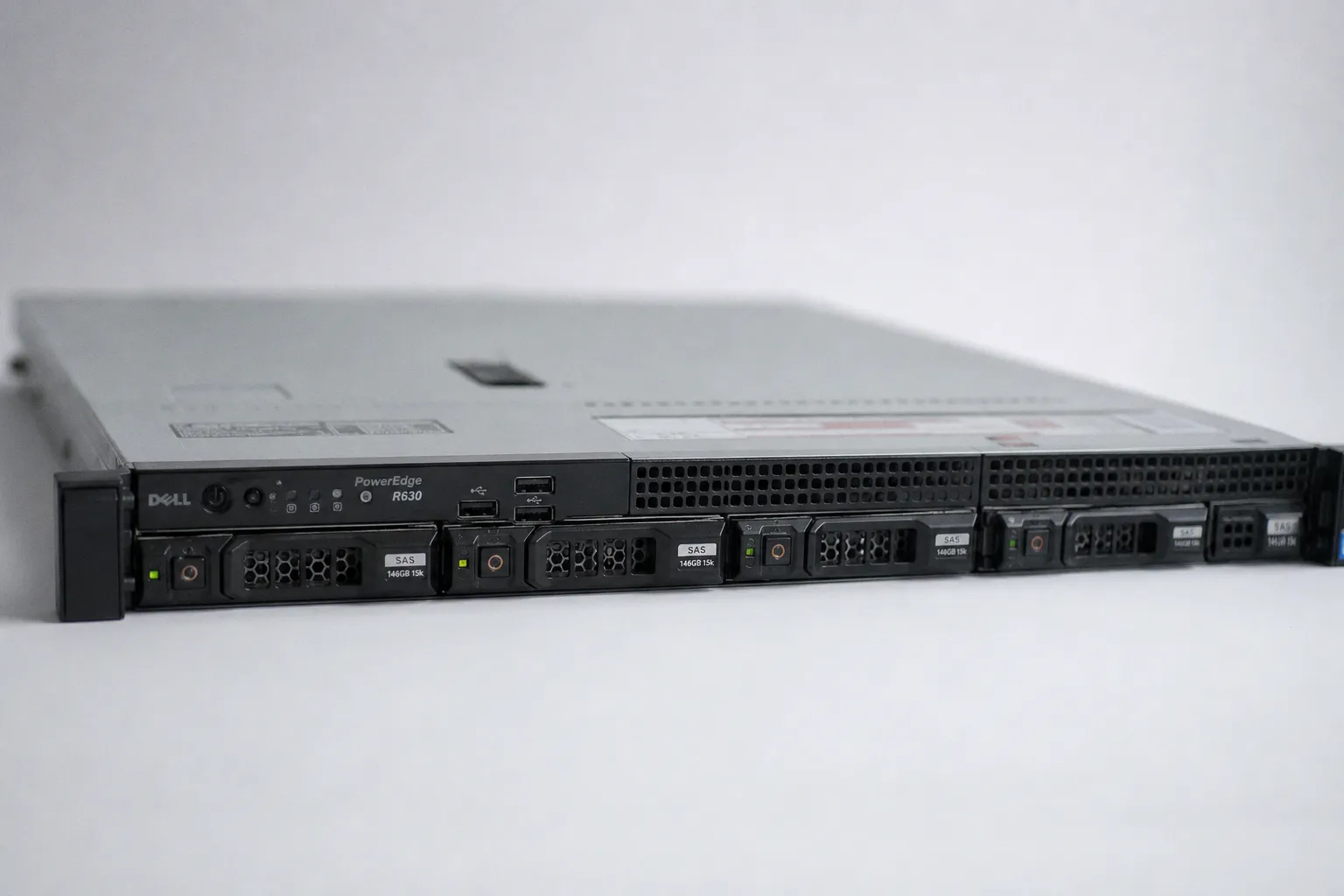
The cleanest appeal of self-hosted RPC nodes is budget stability. A dedicated bare-metal server suitable for a basic Ethereum full node can cost roughly $50 to $80 per month. That gives a team direct access to chain data without per-call credits and without an upstream rate-limit policy dictating application behavior.
At low traffic, this is usually the wrong optimization. Managed free tiers and entry plans can be cheaper than operating hardware, especially when the team has no on-call capacity. A node that costs $60 per month is not a bargain if it consumes ten engineer-hours in setup, recovery, client upgrades, and debugging.
At sustained usage, the arithmetic changes. Not because self-hosting creates free compute—it absolutely does not—but because marginal read cost is no longer attached to each API request. Your limiting resources become disk IOPS, CPU, RAM, bandwidth, concurrent connection handling, and the quality of your caching layer.
The word “node” also hides several different machines:
| Deployment target | What it is good at | What breaks first |
|---|---|---|
| Standard full node | Current-state reads, transaction relay, basic application RPC | Deep historical queries and archive-dependent workloads |
| Archive node | Historical state access, backfills, forensic queries | Storage, sync duration, disk throughput |
| Managed RPC | Fast launch, global endpoint access, specialized modules | Credit overages, opaque limits, provider dependency |
| Hybrid RPC tier | Stable core reads on owned infrastructure, managed fallback for spikes and specialist calls | Routing complexity and observability gaps |
For Ethereum archive workloads in 2026, the storage numbers are not decorative:
- Geth in path-based archive mode uses approximately 1.9 to 2.0 TB on Ethereum mainnet.
- Erigon v3 with Caplin is around 1.77 TB.
- Reth archive is around 2.8 TB.
- Legacy hash-based Geth archives can require 12 to 20+ TB.
That is before replicas, snapshots, headroom, monitoring agents, staging nodes, and the uncomfortable reality that a production disk should not run at 98% capacity because the monthly budget sheet says it technically fits.
For high-throughput L2 environments, node sizing moves fast from “developer infrastructure” to actual systems engineering. A production-grade Reth archive node serving Base-scale demand may require enterprise-grade hardware: an AWS i7i.12xlarge class machine or larger, RAID 0 NVMe, and at least 128 GB RAM. The cost profile here is not comparable with a $50 bare-metal full node.
That distinction gets missed in self-hosting debates. “Run your own node” is not one decision. It is a set of decisions about chain, client, retention mode, query profile, and service-level objective.
A low-volume app reading recent Ethereum state has one infrastructure envelope. A multi-chain analytics product needing traces and archival history has another. Treating both as generic web3 development tools is how teams underprovision by an order of magnitude.
The archive shortcut has a sharp edge: eth_getProof
Geth’s path-based archive mode is a major storage efficiency win. Roughly 2 TB instead of a legacy archive footprint in the 12–20+ TB range changes the feasibility of running historical infrastructure.
But it is not a complete replacement for legacy hash-based archives.
The missing capability is historical Merkle proof support through eth_getProof. If your application needs to generate or validate account and storage proofs at historical blocks, Geth path-based archives do not satisfy that requirement. The lower storage number comes with a specific capability boundary.
This is exactly the kind of constraint that gets erased in an architecture slide. Someone writes “archive node” as if that guarantees every historical RPC method. It does not.
Before choosing a client, classify the historical work:
- Historical balances, storage reads, and event analysis: path-based archive modes may be sufficient, depending on methods and implementation requirements.
- Proof-serving at historical state roots: plan for a legacy hash-based archive or a managed endpoint that explicitly supports the required proof behavior.
- Trace-heavy incident analysis: verify trace method availability, retention, execution latency, and rate limits rather than assuming archive access implies usable tracing.
- Indexer backfills: test wide
eth_getLogsranges and concurrency limits. The bottleneck may be provider policy or local disk behavior, not raw CPU. - Protocol verification workflows: pin exact block heights and test against real contracts. “Supports historical data” is not a test result.
Two terabytes solves a storage problem. It does not automatically solve a historical-data product requirement.
This is why managed providers retain a role even inside mature self-hosted stacks. They can supply specialized APIs, trace modules, deep historical access, and geographic redundancy that a small operations team may not want to reproduce.
The useful question is not, “Can we self-host?” Most teams can run something. The question is, “Which RPC methods must we own end to end, and which are cheaper to rent with explicit limits?”
Find break-even by method mix, not by monthly plan price
The usual break-even calculation compares a $50–$80 node to a $149 managed plan. That is a starting point, not an analysis.
A real model has three layers.
1. Direct infrastructure cost
For self-hosting, include:
- server or cloud instance;
- NVMe storage and growth headroom;
- egress and cross-region replication where applicable;
- monitoring, logs, metrics retention, and alerting;
- backup or snapshot strategy;
- a standby node or failover endpoint;
- engineer time for upgrades, incident response, and performance work.
For a managed API, include:
- base subscription;
- weighted credit consumption by RPC method;
- overage pricing;
- higher-tier features such as archive, trace, and debug access;
- extra providers used for redundancy;
- the engineering cost of adapting to provider-specific limits.
This produces an uncomfortable result: a cheap managed plan can be more expensive than a node at scale, while a cheap bare-metal node can be more expensive than managed RPC once operational labor is priced honestly.
2. Request displacement
Do not ask whether a node replaces “the provider.” Ask how much paid traffic it can displace.
A self-hosted node is highly effective for:
- repeated reads of current state;
- internal services operating close to the node;
- known high-volume contract calls;
- controlled indexing pipelines;
- mempool-adjacent or transaction-relay workflows where direct observability matters.
It may be less effective for:
- globally distributed retail traffic without edge routing;
- rare but demanding historical proof queries;
- elastic spikes that would require oversized always-on hardware;
- multi-chain coverage where each chain multiplies operations;
- specialized tracing and debugging needs that your chosen client does not expose efficiently.
A hybrid deployment often wins because it routes by query class rather than by ideology.
For example:
| RPC traffic class | Default route | Reason |
|---|---|---|
Repeated latest reads for backend services | Self-hosted primary | Predictable load, low marginal cost, direct cache control |
| Transaction submission | Self-hosted plus managed broadcast fallback | Better resilience against local peer or propagation issues |
| Deep archival queries | Managed archive endpoint | Avoids forcing every local node into the largest storage tier |
| Trace and debug workloads | Provider or specialist node pool | Capability and performance vary heavily by client |
| Public frontend reads | CDN/cache layer, then managed or regional RPC | Protects origin nodes from duplicate client traffic |
| Emergency failover | Secondary provider or alternate self-hosted region | Avoids a single infrastructure blast radius |
3. Failure cost
The spreadsheet needs one more column: what does a degraded RPC path cost the product?
For an NFT gallery, a few seconds of stale data may be tolerable. For a money market calculating collateral health, stale reads, missed events, or transaction failures become protocol risk. For an oracle-adjacent application, query freshness is part of the data integrity envelope.
Measure:
- head lag relative to a reference endpoint;
- p50, p95, and p99 latency by RPC method;
- error rate by upstream;
- reorg handling delay;
- rate-limit and timeout frequency;
- cache staleness by block number;
- time to fail over;
- percentage of calls that can be retried safely.
Without those metrics, “reliable RPC” means nothing.
Resilience is now a routing problem
Managed RPC used to mean accepting a centralized operational dependency in exchange for convenience. The line is getting less clean. In 2026, Infura moved to a credit-based pricing model and integrated its Decentralized Infrastructure Network, or DIN, positioning decentralized RPC-as-a-service as part of its failover and resilience model.
That does not remove the need for architecture. A decentralized network underneath an endpoint does not guarantee that your application has correct retries, sane timeouts, observability, or method-level fallback logic.
The common production failure mode is simpler: one RPC URL is embedded everywhere.
It sits in the frontend environment variables. It sits in backend workers. It sits in deployment scripts. It sits in the indexer. Then the provider rate-limits, a regional route degrades, or a specific method becomes constrained. Every component fails in the same direction.
Build an RPC control plane instead:
1. Keep provider adapters behind one internal interface. Do not scatter vendor URL semantics across applications.
2. Route by capability. Archive, proofs, traces, current-state reads, and transaction broadcast should have distinct policies.
3. Use block-aware caching. Cache deterministic reads keyed to block number or block hash. Invalidate on head movement; do not pretend latest is a stable cache key.
4. Maintain at least one independent fallback path for critical flows. It can be a second managed provider, a self-hosted node, or both.
5. Benchmark your own calls. Generic provider latency claims do not describe your contract, your region, your payload size, or your concurrency profile.
6. Drill failure. Disable the primary upstream in staging. Simulate head lag. Force partial errors. Watch whether the application degrades gracefully or amplifies retries into an outage.
This is where self-hosting earns its place even when it is not the cheapest path. Running one independently controlled node gives operators a reference point. You can compare state, block height, response behavior, and propagation against managed endpoints instead of trusting a single black-box response.
The efficient answer is usually not “all in”
For early web3 development, managed RPC providers are the rational default. They eliminate setup time, offer broad chain coverage, and keep a low-traffic project from operating infrastructure it does not yet need.
For stable, read-heavy, predictable workloads, self-hosted RPC nodes can flatten marginal cost and improve control. But a full node is not an archive node. An archive node is not necessarily a proof server. And a cheap server is not a production-grade multi-region RPC platform.
The practical move for node operators is a hybrid baseline:
- run a self-hosted node for high-volume, current-state internal reads;
- cache aggressively at block granularity;
- reserve managed APIs for archive, trace, debug, burst capacity, and geographic failover;
- meter every method and every retry;
- add capacity only when measured credit burn exceeds the fully loaded cost of owning that query path.
Do not buy hardware because “decentralization” sounds correct. Do not accept credit billing because deployment was easy.
Route the cheap, repeatable work to infrastructure you control. Rent the expensive, irregular, specialist work. Then let latency, head lag, error rate, and cost per successful action decide what moves next.